
How collaboration and innovation can protect the UK’s subsea advantage
The North-east of Scotland is home to one of the largest concentrations of underwater engineering and subsea technology expertise anywhere in the world. Built over more than five decades, this engineering legacy has underpinned the exploration and production of the North Sea’s oil and gas resources, establishing the region as an internationally recognised centre of subsea excellence.
But as the domestic offshore landscape evolves and competition from other global hubs intensifies, the UK will have to work to maintain that position.
Protecting the UK’s subsea advantage will depend on our ability to turn innovation into commercial adoption and take our expertise into new sectors and international markets. At Krona Subsea, we believe it has never been more important to create the right conditions for collaboration and long-term growth.
One of the greatest opportunities lies in how we collaborate. Operators and larger contractors need to engage with SMEs earlier, support the development of new technologies and be more willing to participate in pilot projects. Working together on live projects allows companies to combine complementary expertise and deliver more complete solutions.
One example is the decommissioning collective formed by Boskalis Subsea Services, which brought together several complementary businesses to offer end-to-end project solutions. The collective has already won awards and secured new opportunities.
We believe this type of collaboration could provide a useful model for UK subsea companies, allowing SMEs to combine their capabilities and compete for larger contracts that may otherwise have been beyond their individual reach.
Looking beyond the domestic market
The UK’s subsea supply chain has developed skills and technologies that can be applied far beyond the North Sea. As domestic activity changes, companies must become more confident in taking that expertise into international markets and applying it in areas such as offshore wind, marine science, defence and autonomous underwater operations.
The UK’s reputation can help open doors. To win work, companies need to understand the challenges facing customers in different regions, build local relationships and show how their technology can be applied.
Collaboration will be just as important internationally. Smaller businesses often have highly specialised technology but may lack the reach or resources to enter new markets alone. Partnerships and consortia can give them access to established supply chains, local knowledge and larger projects, while giving operators a more joined-up offering.
Creating the right culture for long-term growth
Another distinct challenge we see first-hand as an SME supporting the industry, is the gap between innovation and adoption. Developing a new technology is one thing but persuading the industry to use it commercially is another.
Customers understandably want evidence from previous deployments before introducing an unfamiliar solution. This can create a difficult cycle for SMEs trying to secure that first deployment. Until they get an opportunity to prove the technology in an operational setting, it’s much harder to build the evidence customers are asking for.
In a sector that has become increasingly risk-averse, progress can depend on finding an internal champion who understands the technology, believes in its potential and is willing to build support for it within their organisation. These early adopters are essential if good ideas are going to move beyond development and into commercial use.
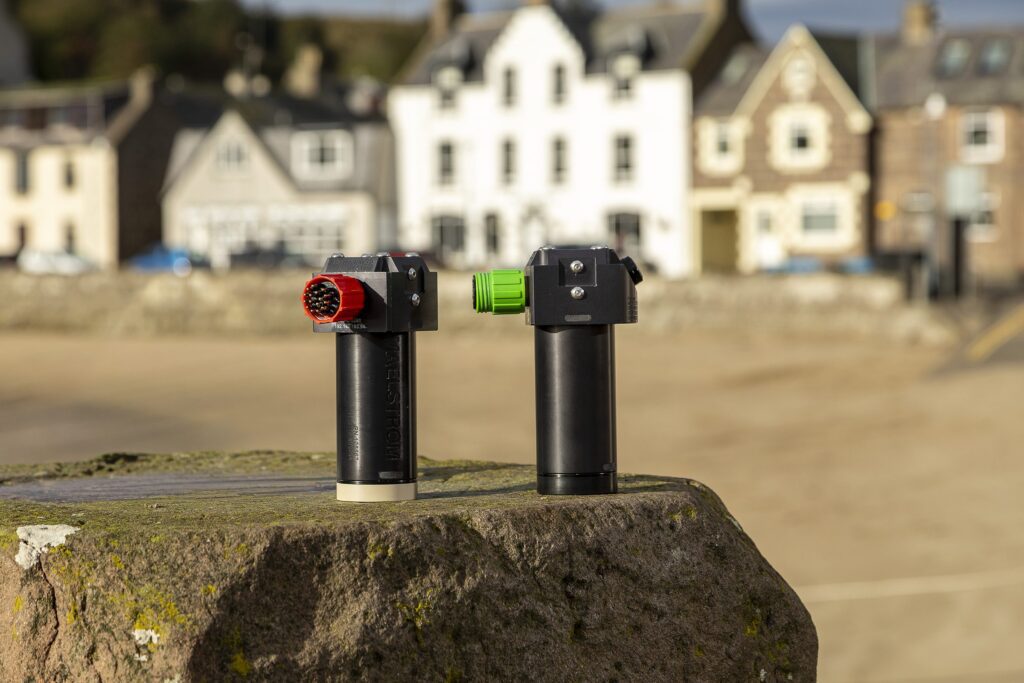
At Krona Subsea, we have experienced the value of collaboration first-hand with our WiSub pinless connector technology. It transfers power and high-speed data through seawater without exposed pins, offering advantages including galvanic separation and greater alignment freedom. It also creates new possibilities for subsea resident systems, autonomous underwater vehicles and seabed docking.
The technology was demonstrated through Renewables for Subsea Power, where Krona’s Maelstrom connector and resident docking system supported autonomous subsea power, communications and monitoring during a 13-month deployment near Orkney. Projects like this show what can be achieved when technology developers, operators and other specialist partners work together in an operational setting.
Other global markets are already moving quickly in areas such as subsea residency and docking. If the UK is to retain its competitive advantage, we need more operators and contractors willing to support promising technologies through controlled trials and pilot projects. These give SMEs a chance to demonstrate how their technology performs under real operating conditions and build the evidence customers need to adopt it.
The future of the UK’s subsea advantage will not come from innovation alone. It will come from giving that innovation the opportunity to be proven, adopted and taken into new markets. We believe contractors and SMEs should work together with a longer-term view and the UK can continue to lead the global subsea industry for decades to come.
