
Defence is not always the first market subsea businesses consider when looking for future growth. There’s no doubt that it can appear difficult to enter, with unfamiliar procurement processes and a perception that opportunities are reserved for large, established defence companies.
At Krona Subsea, we see a significant crossover between the expertise developed within the subsea energy industry and the technology needed for underwater defence applications. And at a time when uncertainty around energy investment is affecting parts of the offshore supply chain, defence offers subsea businesses an opportunity to apply their capabilities beyond their traditional customer base.
For SMEs prepared to understand the market and take a longer-term approach, it’s an area that deserves closer attention.
The subsea expertise defence already needs
It is widely accepted that the UK, and the North-east of Scotland in particular, has built an extensive base of underwater engineering expertise through decades of activity in the North Sea. Many of the technologies developed to operate safely and reliably in challenging offshore environments also have potential applications in defence.
Cameras, lighting, connectors, remote operations, robotics, autonomous systems and underwater inspection technology are not limited to oil and gas or offshore renewables. These capabilities can also help address challenges involving underwater surveillance, inspection, communications and the operation of subsea equipment.
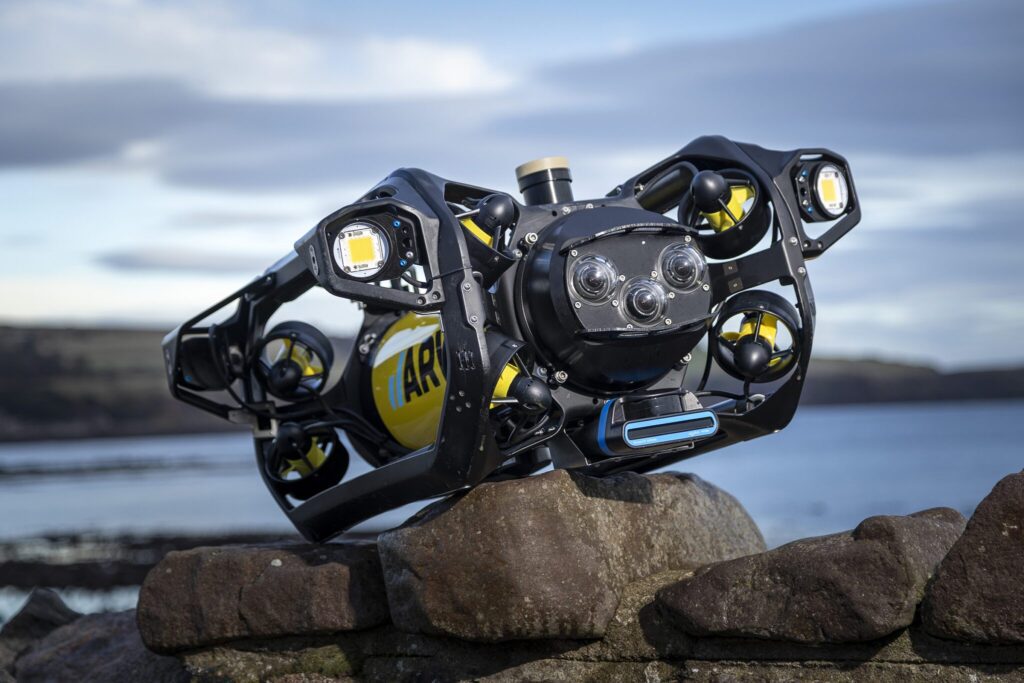
We’ve seen this crossover play out directly. A seabed docking and autonomous underwater vehicle (AUV) system originally developed to support subsea energy monitoring is a good example. The same charging, communications and docking capability that lets an AUV carry out unmanned inspection and monitoring work on an energy asset translates directly into long-duration underwater surveillance without needing a vessel or crew on site to support it. The underlying technology doesn’t change; only its purpose does.
For subsea SMEs, the starting point is to consider how their existing products and expertise might help solve a specific defence challenge.
The barriers to defence are not always what SMEs assume
One of the biggest perceived barriers is that SMEs have to sell directly to the Ministry of Defence or the Royal Navy. In reality, a more achievable route may be to work with an established defence contractor or another business already operating within the supply chain. It’s a route many subsea suppliers will recognise from offshore energy.
Smaller companies can often respond quickly when a technical challenge calls for specialist expertise. Larger contractors understand the market and how to navigate procurement. Bringing those strengths together can give an SME a practical way to introduce its technology to the sector.
Defence is not necessarily an easy or immediate market as requirements can be highly specific, and businesses must be prepared to meet the relevant technical, security and procurement standards. However, it should not be dismissed simply because the route to entry looks unfamiliar.
At Krona Subsea, defence has become an increasingly important market as uncertainty around energy spending has slowed activity in parts of the traditional market. It has allowed us to apply our existing subsea knowledge and capabilities in a different setting and broaden our customer base.
That experience has reinforced our view that many subsea businesses may be closer to the defence market than they realise.
The opportunity depends on finding the right fit
For any SME considering defence, the first step is to understand the challenges the market faces, whether their product or service offers a credible solution. They should be clear about the problem their technology solves and how it compares with existing options.
Speaking to former defence personnel and businesses already working in the supply chain can help SMEs understand how their technology would be used and where it could add value.
Collaboration can also provide a route into the sector, particularly when a project calls for several specialist technologies. By combining complementary capabilities, SMEs can offer larger contractors a more complete solution. That means understanding how the technologies work together and building the solution around what the end user needs.
Entering the defence market takes time. It’s worth researching the sector and starting to build relationships while there’s time to find the right fit. For subsea SMEs with technology that addresses a genuine need, defence offers a credible way to broaden their customer base over the long term.
To find out more about how Krona Subsea supports customers in the defence sector, get in touch with our team.
